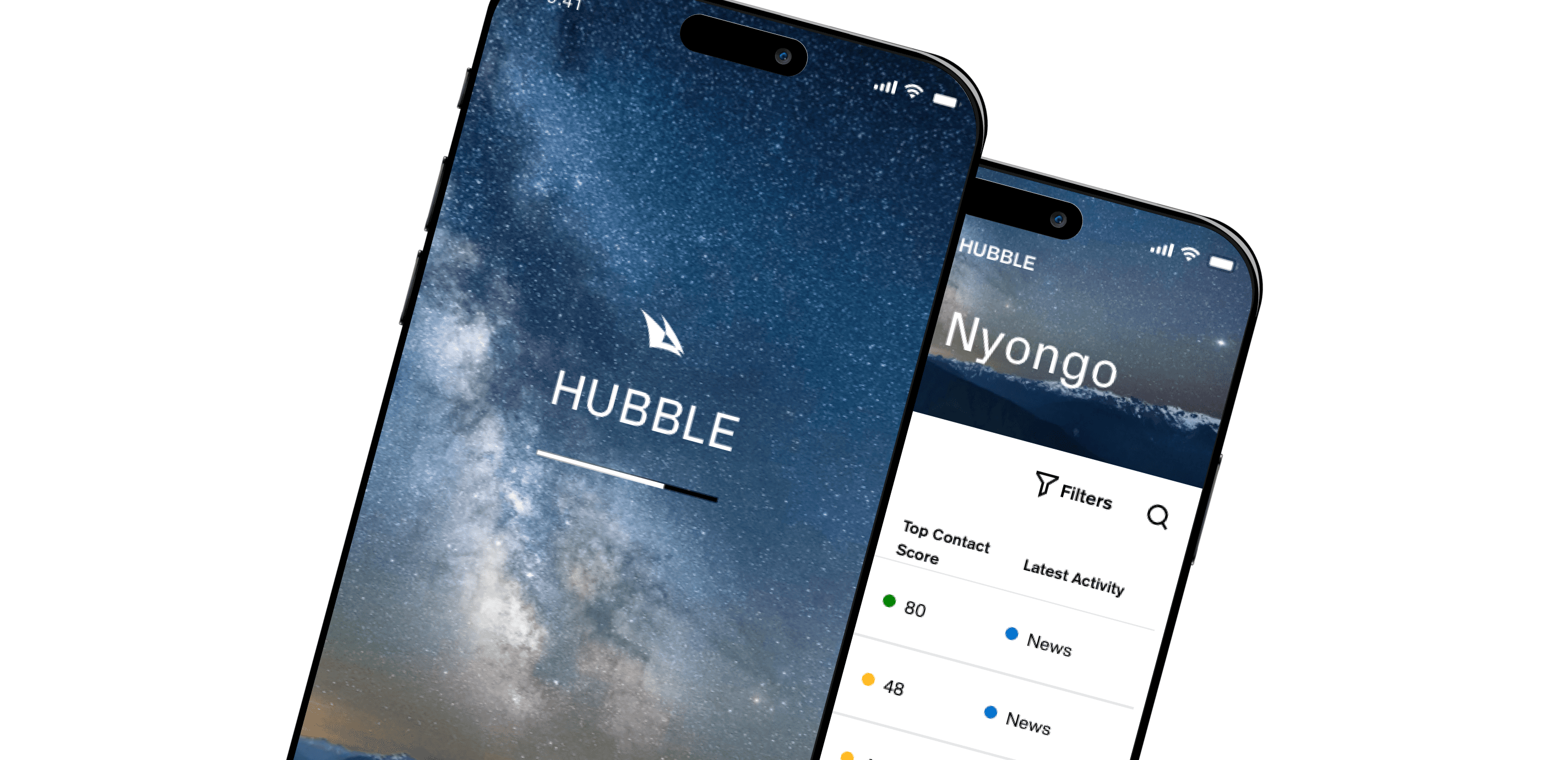
At Credit Suisse I worked within the Digital Transformation team, embedded in investment banking. Hubble was a mobile application designed to help investment bankers track target companies, surface internal connections across the bank, and log client interactions. On paper it was a lead management tool. In practice it became one of the most human and complex design challenges of my career.
Client:
Credit Suisse
My Role:
Product Designer
Year:
2020-2022
Service Provided:
UX/UI, UX Research, User Testing, Prototyping
The Problem
Investment bankers were operating across a fragmented set of manual processes. They scanned newspapers for news about structural changes at target companies. They had no visibility into which colleagues had relationships with key clients. They lost track of interactions because nothing was centralised. And they were rarely at a desk, which made any desktop solution a non-starter.
But the more significant challenge emerged in user research. The bankers we were designing for didn't just find existing tools inconvenient. They perceived a new internal tool as a direct threat to their expertise and value. Understanding that, and designing through it, became the real brief.
The Solution
We paused the original direction, went back into qualitative research with a reframed set of questions, and rebuilt our understanding of what these bankers actually needed day to day.
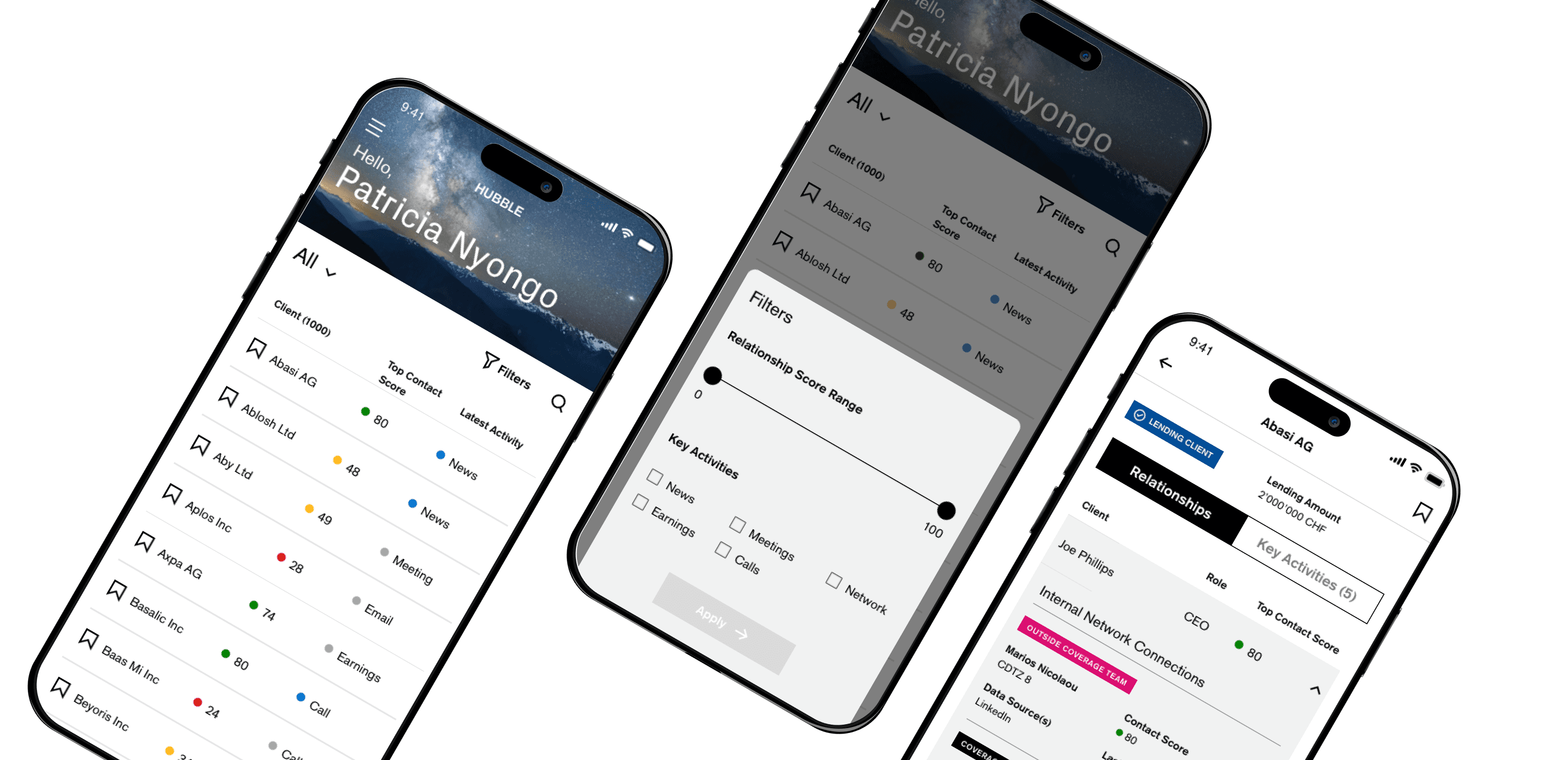
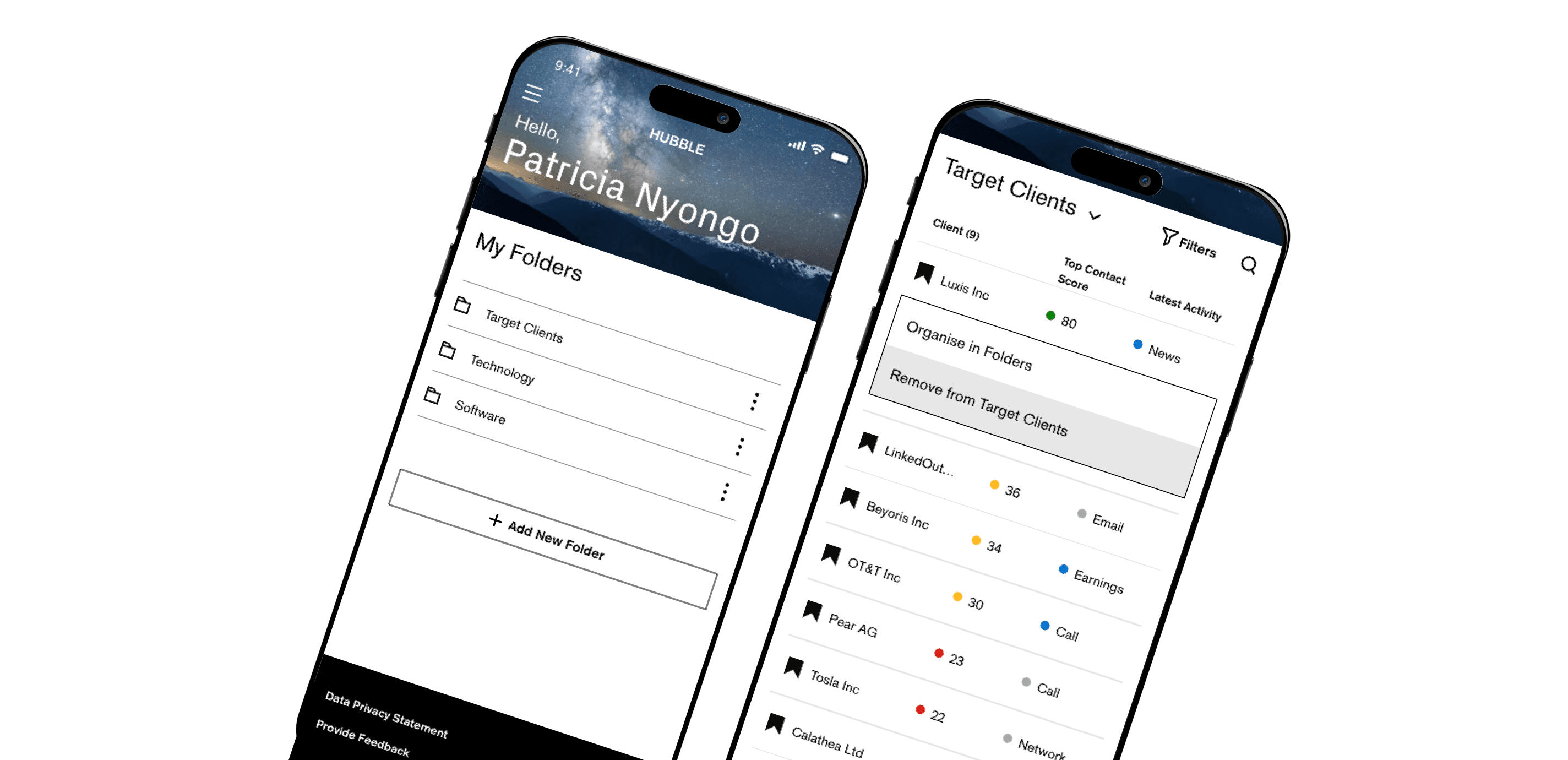
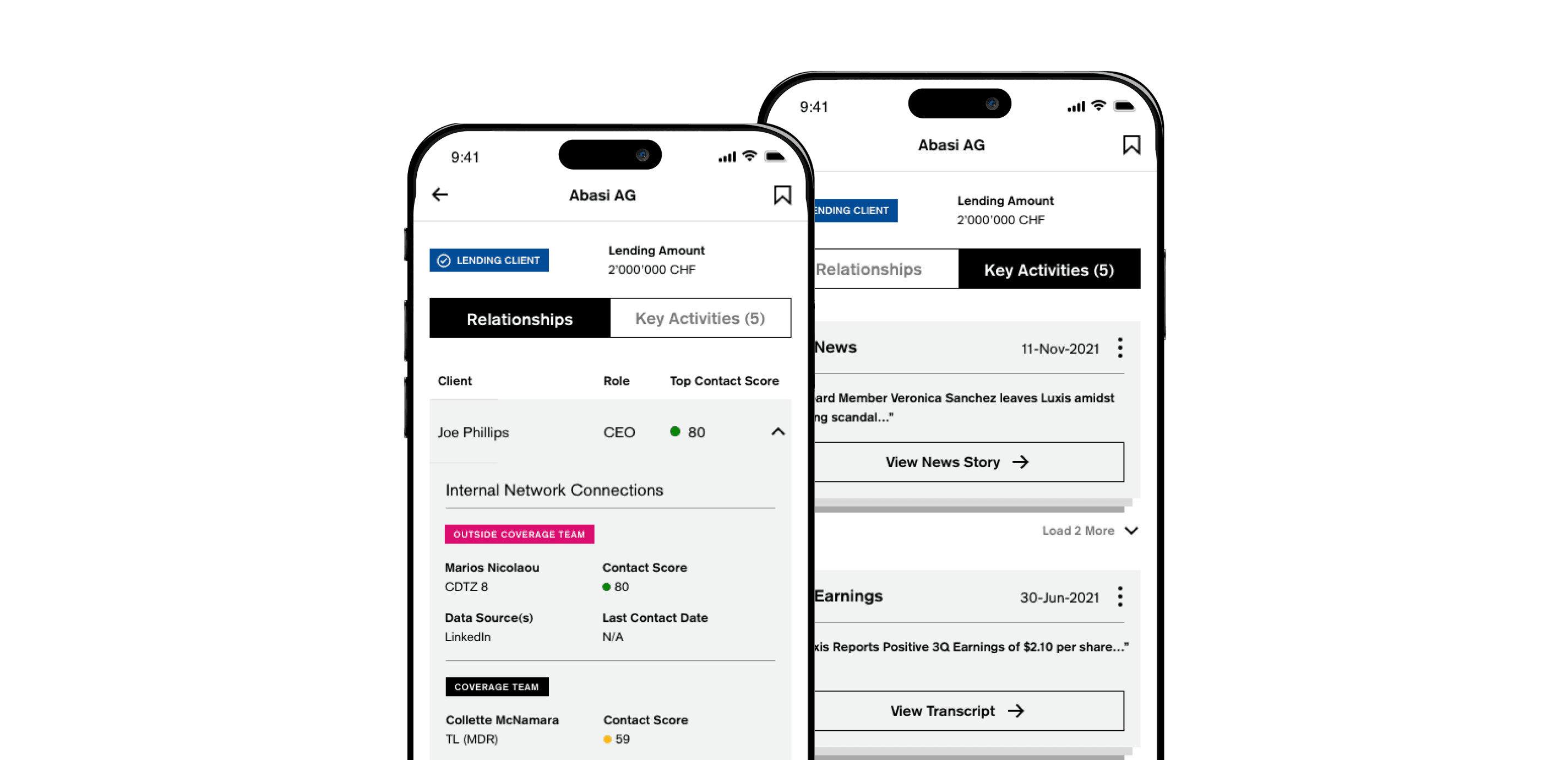
The result was a product designed to complement rather than compete with their expertise. News aggregation surfaced relevant company updates automatically. Connection insights made tacit relationship knowledge visible across the organisation. Interaction tracking centralised meetings and correspondence so leads stayed active. The entire product was built mobile-first for people who were rarely at a desk.
The shift in how users perceived the product, from threat to tool they could see themselves using, was the outcome that mattered most.